Company Story: R James Properties, Atlanta


When Dick James was approached with the opportunity to purchase a dilapidated apartment complex in East Atlanta, he had no idea how life-changing that deal would be.

In 2006, R James Properties was already managing 1,500 units across Atlanta. The property in consideration was located in a little-known town named Clarkston. It was unkempt, and needed significant renovations. And yet something within him compelled the industrious entrepreneur to say “yes” to the challenge.

Dick placed his son, Kelly James, in charge of the new location, hoping he could turn things around at the failing property. Together they began the hard work of restoring the 213 units and filling them with residents.

It wasn’t long before Kelly recognized there was something very different about the Clarkston community. Every day on the job seemed like a stroll through Epcot at Disney.


A family from Burma,

A couple from Congo,

Six siblings from Syria,

And an elderly woman from Somalia…

A kaleidoscope of ethnicities cohabitated within every building.


He had stumbled upon the refugee community. Kelly knew very little about refugees, but he soon ascertained one key fact: they were terrific residents.

The only individuals he had evicted at Clarkston Townhomes, thus far, were Americans. Meanwhile, his refugee residents maintained a $0 balance, consistently, at the end of every month— a phenomena that wasn’t taking place even at the company’s class A apartments.

Not only were they paying their rent without fail, these individuals were expressly thankful. Their gratitude was conveyed not just by mouth, but in action, as they conscientiously followed the property rules. Both the residents and the company were happy, and before long, the property attained a rare 100% occupancy.

Kelly recognized the incredible potential, and turned his focus on keeping and attracting more of these excellent renters. Unfortunately, his ability to speak only English and Spanish left much lost in translation. He struggled both to understand his residents’ problems, and to communicate expectations. Kelly sought the help of refugee organizations to translate several of the company’s pamphlets. Eventually the frustrated leader came to a clear revelation: to effectively reach his diverse consumer base, he would need an equally diverse team of employees to serve them.

He placed a call to New American Pathways, a nearby refugee nonprofit. Paedia Mixon answered the phone, hearing Kelly’s eager voice asking, “What language do most refugees speak?” The wise executive director returned a few questions, finally concluding that Arabic would be most helpful.

“Great!” Kelly responded, “Can you send me someone who can speak both Arabic and English as soon as possible?”

The next morning Kelly James found himself sitting across the table from Kareem, a clean-cut, long-faced former General in the Iraqi Air Force. He spoke fluent Arabic and English, which met Kelly’s most pressing need of someone who could communicate to residents. He also figured that a man who previously commanded a military could certainly handle a few mild-mannered residents. Kelly hired Kareem on the spot.

“I never questioned whether he could do the job because he wasn’t an American.” Kelly remembers. “I’ve come across that kind of attitude before, and I quickly let those team members know we don’t tolerate that.”

Kareem quickly proved himself as a valuable asset. Communication with residents improved, and business was generally running more smoothly. It wasn’t long before he began moving up in the company.

Kelly later found out Al Qaeda had blown-up Kareem’s house, killed his twin brother, and shot Kareem downtwicein combat. One of those times, he survived by floating in the Persian Gulf for three days.

His determined spirit often came in handy, but especially one unforgettable week in 2009 when it rained for seven days straight. A blurry-eyed Kelly awakened at 4am to a knock at the door, and Kareem on the other side with some bad news: fifty units were flooded with more than a foot of water. Kelly and Kareem  immediately went to work.

They spent 18-hour days together for the next week to repair the damage, neither backing down, and both doing whatever it took to keep residents happy.

“Kareem has a military mindset. You give him a mission, he takes the hill,” Kelly shared.

After such great success at their first Clarkston property, they bought another in 2009, then a third in 2011. As their properties grew, so did their team—both in numbers, and in diversity.

Mustafa, a former computer tech, took over managing Clarkston Townhomes. Before coming to the U.S. as a refugee, he traveled with his wife and four kids through the mountains of Iraq to escape death.

Before the war, Amer ran a textbook company that supplied Syria’s schools with books. Now he runs R James Properties’ Sage Point Apartments, as manager.

Karimi helped the U.S. military in his home country of Afghanistan. He moved to the U.S. after his life was threatened by the Taliban. Now he is one of the company’s best maintenance technicians.

The R James team has grown to an impressive 115 full-time, “high-caliber” individuals, as Kelly calls them, some from right here in Georgia, and others from around the world.

A couple dozen are refugees, who hold positions at every level of leadership, from leasing agents to maintenance technicians. R James Properties didn’t hire them to earn a tax credit, or an award for being the best place to work. They became a diverse workforce out of necessity, but quickly realized “treating people the way you want to be treated” is a great way to build a strong culture.

Kelly’s not shy about his goal of “apartments so clean your mama would move in it,” and that level of excellence has certainly set R James Properties, Inc.  apart from the competition. Another distinguishing trait is the company’s low rate of turnover— not just among its residents, but among the employees who work there. At a time when most companies can hardly find or keep dependable workers, very few of Kelly’s workers venture out in pursuit of something else. And the few that do, he says, often return. As it turns out, everyone wins when you treat people right and provide a good service.

Kelly gets a lot of invites these days— to everything from dinner parties to gym meet ups. His employees don’t just work together, they live life together. They are more than coworkers. They are family.

Never could he have imagined a team so diverse, but neither could he have dreamed of being this successful. R James Properties now manages an impressive 4,003 units across the Atlanta area, and has been named in Atlanta Business Chronicle’s “Top 25 Apartment Management Companies” multiple years. Kelly has high hopes of continuing to grow and expand.

“I think we owe a lot of our success to our diversity,” Kelly shares, “Employees from a wide variety of backgrounds will often come up with new ways of approaching challenges. But rather than working to impose diversity, we have focused on treating our employees fairly, while helping them to achieve shared goals. Diversity has followed.”

. . . . . . . . . . .

Diversity is just one of the many benefits that result from hiring the refugee workforce. At Amplio, we believe so tremendously in the power of the refugee workforce to raise productivity, lower turnover, and revitalize American businesses that we’re writing a book about it.

“Refugee Workforce” releases Fall 2019. Visit the book website to learn more, sign up for email updates or join the launch team.

Want to hear what other companies are saying about the refugee workforce? Visit our testimonial page for more stories.
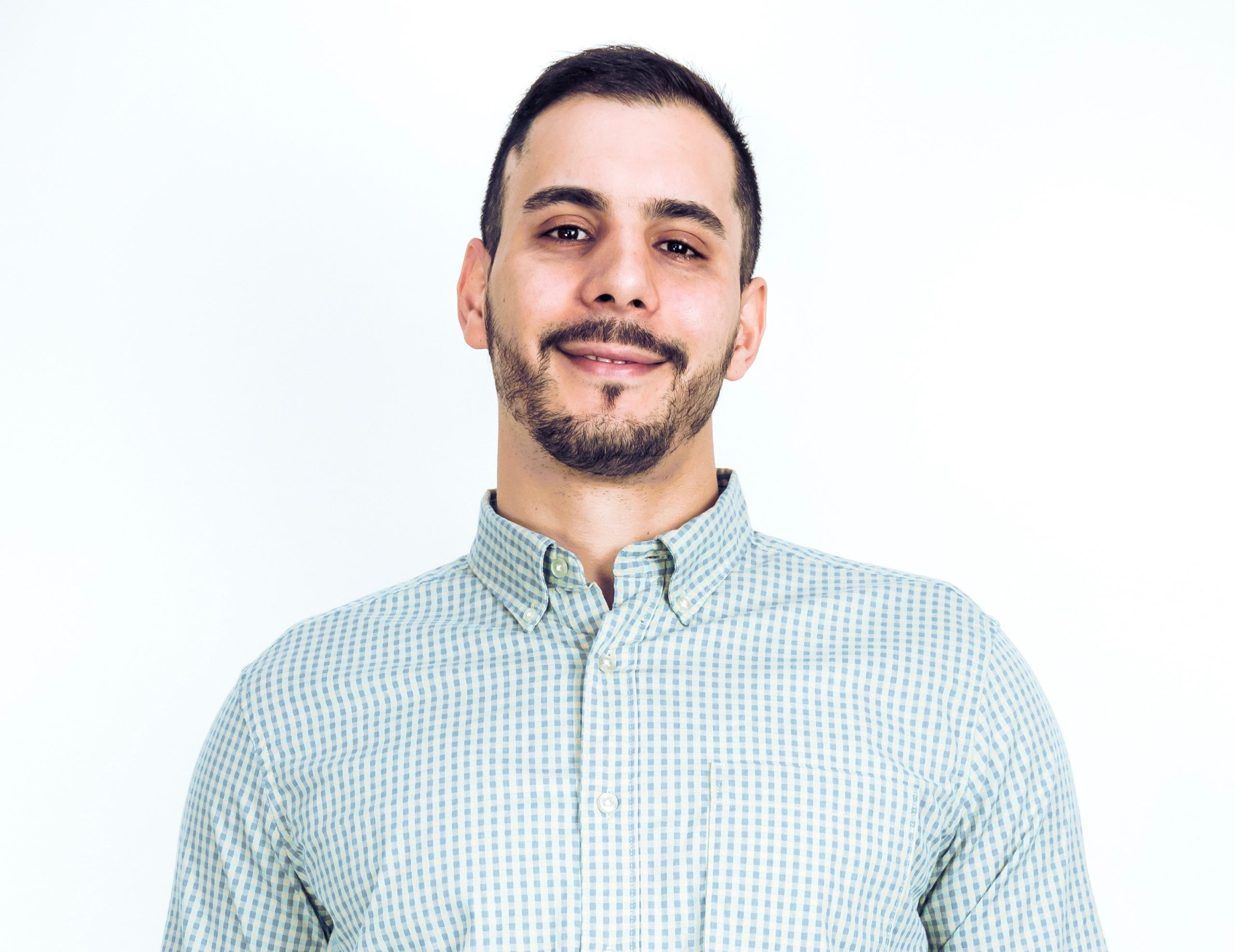
Team Member Highlight: Oday Helal

Growing up in the Holy Land never seemed out of the ordinary for Oday Helal. He remembers helping out with his family’s olive wood business from a young age, and playing his favorite sport—basketball.

After finishing high school, he went to Bible college, where he graduated with an Associate’s degree in media and journalism. He began full-time work with Athletes in Action, where he had volunteered for many years beforehand. Oday had never stopped playing basketball, and continued to grow in size and ability. As Bethlehem basketball clubs became more competitive, one reached out to him about playing professionally.

“There’s no greater pride than to represent your city,” he says about the experience. “It was something that I really loved.” 

Oday played semi-pro for four years with the Palestine National Team, at the same time coaching and mentoring boys and girls in youth leagues. But after getting married, in 2017, Oday and his new wife decided to move across the ocean, to America. 

They said goodbye to family and friends, and resettled in Raleigh, North Carolina where they had a few connections. With the help of his mentor, Oday began searching for a career that would utilize his abilities and passions. 

It wasn’t long before a friend introduced Oday to Luke Keller, president of an Atlanta-based refugee staffing agency, called Amplio Recruiting. After hearing more about Amplio’s vision, the prospect of working for the unique company excited him.

“I’m an immigrant myself, I feel a connection to refugees,” Oday shares. “I know that they are willing to do whatever it takes to provide a good life for themselves and their families.”

Oday took on the job of Director of Business Development in early 2019, and has since made many valuable connections for Amplio in the Raleigh community. 

“Oday is an athlete through and through,” says Amplio president, Luke Keller. “His competitiveness, hard work, and get-it-done mentality make him the ideal team member to win big contracts to help staff the reliable refugee community.”

“It’s been a blessing working with Amplio,” Oday shares. “It’s the type of job that doesn’t feel like a job— it’s something I enjoy doing every day.”

“Coming from a business background, I’ve always admired business owners. So the greatest thing I enjoy doing is reaching out to them, and learning more about their experiences.”

These meetings give Oday the opportunity to share with Raleigh business owners about the value of the refugee workforce. “There’s a lot of confusion about refugees and immigrants,” he explains. “It’s so fascinating when I share facts with business owners and they respond by saying, ‘We didn’t know that!’”

Oday shares that he recently met with a restoration company that had been hiring through temp agencies. However, they were disappointed by their results, and were now looking for a new labor source. Oday had the privilege of telling them about the legal, drug-free, dependable refugee workforce. The owner responded by saying he would be happy to pay more for employees that would remain loyal to the company.

On any given day you can find Oday doing whatever it takes to fill open positions and spread the word about the refugee workforce. “In the Middle East we have a saying,” he shares. “You never bite the hand that feeds you. That’s why refugees are so dependable. They appreciate their employers for giving them a job, and they are loyal in return.”

Oday is just one of our many passionate Amplio team members eager to connect you with the best-kept secret for revitalizing the U.S. economy: the refugee workforce.

If you’re curious to learn more about how hiring refugees can help your business boost retention, morale, and productivity, we’d love to connect. Click “locations” on the menu above to discover your nearest Amplio office. 

. . . . . . .

Want to read more inspiring stories like these? Good news—we’re writing a book!

“Refugee Workforce” is set to release Fall 2019. “Refugee Workforce” weaves engaging, real-life stories with supporting statistics to present a compelling case for hiring the displaced. Visit our book website at www.refugeeworkforce.com to sign up for email updates, join the launch team, and more.

How President Trump is Helping Refugees Get Jobs

The escalating trade war is causing U.S. businesses to consider manufacturing their products in America, leading to more jobs for refugees who have legally resettled in the U.S. and are eager to step into manufacturing jobs unfilled by American citizens.

Jim Konides is the CEO of Blusion Laundry, a wash, dry and fold laundry service based in Atlanta, Georgia, that is quickly expanding across the country. He and his wife Nancy have been running the family laundry business for 6 years, and even their children are now engaged in strategic positions throughout the growing company.

Blusion’s latest market strategy is to install weatherproof smart lockers in strategic locations ranging from universities, to apartments, to hospitals. When someone places dirty laundry in a locker, it’s retrieved by a Blusion team member and taken to their laundry facility. There, they use a proprietary system that conserves water while thoroughly deep-cleaning each item of clothing. Once clean, the garments are dried, folded and placed neatly back into the original locker within 48 hours.

Jim is strategic partners with the oldest manufacturer of automated lockers in the world, headquartered in Australia, but production takes place in China.  Just after receiving their first locker shipment arrived they got hit with the newest update involving the U.S. trade war. President Trump had just announced that tariffs on $200 billion worth of Chinese imports would increase, to which China responded by putting levies on $60 billion of U.S. goods.  

That stroke of the pen by President Trump caused a massive increase in production costs which would deeply cut into Blusion’s growth.

The technology and design of the lockers has been painstaking process but Jim was confident he had the price in line with all the features he wanted when the tariffs were levied. Instead of a 1% tax, he now had to pay 25% in taxes.   This cost would hang the laundry company out to dry.

Being forced to consider other options, Jim turned his attention back to the refugee community, which he had begun hiring from the previous year. The results had been tremendous—Blusion’s employee retention rates had increased, along with productivity. The results were so positive, and the social impact he and Nancy were witnessing was so widespread, they made a bold decision: to build out all future projected laundry facilities in the center of refugee resettlement communities around the U.S. 

Jim knew refugees made up a dependable workforce for washing and folding laundry, but could they help him with his locker conundrum, too? The team at Amplio Recruiting, a staffing company placing refugees into jobs in several U.S. markets, was ready to help. They had been working with Blusion over the past year helping connect them with refugee women who were excited by the safety and stability the job of folding clothes provided for them.

Amplio assured Jim the lockers would be no problem with the help of their non-profit partner, Tekton Career Training. Tekton provides training for refugees in electrical, welding, carpentry and apartment maintenance.

Blusion and Tekton talked, made plans, and developed a partnership. Now, in the next few months, production will resume right here in their hometown of Atlanta, where a team representing countries around the world will be paid to manufacture the specialized lockers. Amplio recruiter, Yonten Basnet, an immigrant from Bhutan is confident these assembly positions will become filled with talented and efficient workers from the refugee workforce. The team will not only reconcile costs for Blusion, but can grow with their demand.

Amplio Recruiting calls the refugee workforce, “the best kept secret for the American economy,” and Jim Konides couldn’t agree more.

As the escalating trade war drives businesses to consider manufacturing and assembly in the US, we must have the workforce to support it. The refugee workforce is a viable solution to our nation’s growing labor shortages. Refugees are quick learners who are not afraid of hard work, and are highly motivated to provide for themselves and their families.

. . . . . . . .

Blusion’s story is among many we share in our upcoming book, “Refugee Workforce,” releasing 2019. “Refugee Workforce” weaves engaging, real-life stories with supporting statistics to present a compelling case for hiring the displaced.

Visit our book website at www.refugeeworkforce.com to learn more, join the launch team, or sign up for email updates.

How to Nurture Your Employees’ Growth Mindset


A growth mindset is a quality every company desires in an employee, but very few have come to expect.

Growth mindset is simply defined as the belief that one’s talent, intellect, and condition in life can all be improved upon with hard work and perseverance. Individuals with a growth mindset embrace challenges, and take hold of every opportunity available to learn new skills and improve themselves every day.

By this simple description, it should be obvious why companies would want their employees to possess this mindset. Employees embody the company culture—where the culture goes, so goes the company. Therefore companies comprised of employees who are consistently learning and re-inventing themselves will, likewise, grow and innovate.

When it comes to employees who are eager to learn and grow, few can compare to the zeal of the refugee workforce. From our front-row seat at Amplio, we have come to recognize a growth mindset is a quite common attribute among refugees. However, hiring individuals with this mindset doesn’t guarantee magical results. Without a nurturing environment, these individuals will quickly become bored and dissatisfied, and it won’t be long before they move onto another company that will support their desire to grow. Conversely, companies that value this mindset and provide healthy paths and boundaries for learning, innovation, and growth will reap loyal employees who stick around for the long-run.

So how can leadership ensure that they are cultivating an environment that encourages their employees’ growth mindset?

Let’s explore five definitive behaviors growth mindset companies cultivate, and their benefits.


Behavior #1: Growth mindset companies praise right actions.

Every employee wants to be recognized for their contributions. As it turns out, most individuals aren’t satisfied solely by a paycheck, but have an innate need for verbal affirmation.

The problem is most leaders only praise right results, not right actions. In these environments, only the smartest and most high-achieving workers are recognized. This can become incredibly frustrating to employees who show up every day and put in their best effort, but don’t always experience the results they are after. When hitting goals becomes the only aim, employees most often either a.) become unmotivated, or b.) do anything (i.e. lie, cheat, and steal) to win. Neither is a desirable outcome.

By encouraging effort over results, you will create a culture where all employees feel appreciated and empowered. This kind of environment is especially important for refugees, most of whom grew up in honor-shame cultures and would rather quit than be publicly embarrassed and shame his or herself. When you praise right actions, you encourage the behavior and confidence that will eventually get you the results you’re after.


Behavior #2: Growth mindset companies encourage continuous learning.

Individuals with a growth mindset recognize that their current level of intelligence and experience doesn’t have to remain permanent. They are hungry to take in every ounce of information and training they can get their hands on that will help them improve. Companies that provide opportunities for these employees to learn by way of books, hands-on training, mentorship, conferences, and more will satisfy this hunger—and see their commitment soar.

When we started working with Booster Spirit Wear to place refugees in their screen-printing warehouse, they immediately recognized their new employees’ insatiable desire to learn. They made a bold decision they felt would best utilize this growth mindset. They told our employees that they were starting in an entry-level position, and would be expected to work a daily eight hour shift, minimum. However, if there was any equipment they wanted to learn how to use, in order to move into a higher-paying position, they could stay longer and be paid to train.

Each employee would be responsible for finding a mentor, who would also be paid for their time. It was a big risk, but the company knew it would pave the way for a better trained team in the future. James, one of the first employees hired under this program, learned how to operate every single machine—and is still with the company four years later.


Behavior #3: Growth mindset companies create and communicate clear career paths.

Growth mindset employees left to figure out a career path on their own will usually find one— right out of the company.

Commitment is the “holy grail” of what most companies are looking for these days.

Every employee represents an investment of time, energy and resources. Employers who want to make the most on this investment need to create and communicate a clear and actionable path forward.

If you want good employees to stay, be sure to cast a clear vision for their future within the company. Taking time to do this will create strong loyalty.

Studies have shown that refugees are naturally loyal, where they are welcomed. When given a clear career path, they are not only more loyal, but sprint harder and faster than anyone else I’ve ever witnessed. When Omega Thompson was hired on at a local hair and body product manufacturer, he worked so hard and picked up on skills so quickly that within days he had earned a raise, and was offered the opportunity to be trained on the forklift— which, of course, he did.


Behavior #4: Growth mindset companies provide actionable, constructive feedback.

The difference between criticism and feedback is investment.

While criticism is centered on finding fault, feedback communicates both an honest review and corrective solutions.

Criticism squelches the confidence needed to get back up and keep going. Growth mindset employees thrive when they are given the information and tools they need to learn from their mistakes, and improve next time. A refugee’s desire to prove his or herself makes them eager to please every time. They would rather hear honest feedback, even when it hurts, rather than find out later that you were disappointed in their performance. When giving feedback, it’s important to remember this: you can still be accepting of a person, while expressing disapproval of their actions.


Behavior #5: Growth mindset companies are accepting of failure and risk

One final consideration, for companies who desire to nourish a growth mindset, is this: create an environment where employees have the freedom to take smart risks.

Failure must be acceptable. Smart leaders know that failure is not an end, rather a stepping stone on the journey to success. Growth mindset employees are inherently unafraid of failure and risk. When a company nurtures an accepting environment, it frees these employees up to be more innovative.

Innovation isn’t just about creating new products, ideas or methods, but improving upon the old ones. When we first placed several refugees at Compac Industries, a leading baby product manufacturer in Atlanta, one of them suggested that inventory be moved to shelves right next to their work stations, instead of where it had always been— on the other side of the warehouse. No one had ever considered this detail before, but this one, simple action resulted in an immediate and drastic boost in productivity.

Nurturing an environment that is accepting of failure and risk will ensure your company won’t get stuck in the rut of “this is the way it’s always been done,” by encouraging constant innovation.

. . . . . . . . .


Growth mindset is just one of the many benefits of hiring refugees we talk about in our new book, “Refugee Workforce,” releasing Fall 2019. “Refugee Workforce” weaves engaging real-life stories with supporting statistics to present a compelling case for hiring the displaced.

Visit our book website at www.refugeeworkforce.com to learn more, join the launch team, or sign up for email updates.


Company Story: Applied Ceramics


Applied Ceramics, Inc. is a world-class technology and manufacturing company, located in Atlanta Georgia. “Applied has a great reputation for being a family owned business with strong moral convictions that directly impact the positive influence they have on their employees and the community,” remarks, Chris Chancey, founder of Amplio. “They were one of a short list of businesses we hoped to work with from early on in the business, because we wanted to be associated with great companies like theirs.”

We sat down with the Vice President of Applied Ceramics, Lee Mitchell, to hear about the company’s experience with the refugee workforce.


What were your problems before hiring with Amplio?

“We had a lot of in and out. People would come onboard and wouldn’t meet the standard of what we needed. We were having problems not being able to sustain our workforce because we were growing so significantly.”


What has been your experience since hiring the refugee workforce?

“It has been great. We’ve grown significantly over the past two years and needed to bring people on quickly—quality people who could learn quickly and do a good job—the refugee workforce has done that. Amplio came in, heard our needs, and started placing people. Our sustainability rate really increased—that was a big deal for the company.”


What would you say are the benefits of hiring the refugee workforce?

“The benefits are significant. Refugees want to work. They want to have jobs. The employees we’ve brought on have had a great attitude. They show up when they’re supposed to show up, and they learn quickly. So not only do we have short-term workers to simply fill gaps, but I believe they will stick with our team for the long-run.”


The refugee workforce is the workforce that will increase your company’s productivity, and decrease costly turnover, while boosting morale. After nearly five years in business, we are more convinced than ever that hiring refugees is not only a socially responsible decision, but also a profitable decision for your company.

>> Learn more about refugees

>> Read testimonials from other companies who have hired the refugee workforce

>> Contact us today for a quote


5 Ways to Support Your Muslim Employees During Ramadan

This week, Muslims across the world began their annual observance of Ramadan. The month-long fast, which started Sunday, May 5th will continue until Tuesday, June 4th, ending with “Eid al-Fitr”, a day of celebration filled with delicacies, gifts, lights and more.

During the next several weeks, observers are not allowed to eat or drink (even water) from sunrise to sunset daily, among other things. The focus, instead, is on prayer and taking part in charitable acts, to renew gratitude.

Dynamic cities like Atlanta, Dallas, Houston and Raleigh, are becoming evermore diverse and necessitate an adaptive approach to how companies do business and nurture a culturally responsive workplace. Moving from ignorance to understanding is a great start—but it is moving beyond mere tolerance to respect and empathy that will ensure your employees loyalty when they know that they belong.

With this truth in mind, here are five ways you can support your Muslim employees during Ramadan:


1. Be aware that it’s happening. It may sound simple, but this is a great start. Even just knowing what Ramadan is, why it’s taking place, and how it’s affecting your employees will help you become more understanding to out-of-the-ordinary behavior or requests.


2. Look for signs of physical decline. In all fields, but especially physically demanding jobs (like manufacturing, construction, landscaping and service), it’s important to keep an eye out for any signs your employee might be in danger. Employees may be adamant about keeping up with their regular workload and hesitant to ask for a much-needed break.

Look for physical symptoms of dizziness and low blood sugar, and encourage them to get plenty of rest. You may even need to communicate to your team to have more patience than normal for uncommon mistakes, as dehydration and changes in blood sugar can cause “brain fog.” Be willing to allow an employee to go home early and rest, as needed, so that they can come back more refreshed and ready to tackle their workload.


3. No need to lighten the workload, but don’t add to it. In being aware that Ramadan is taking place, it’s imperative to note that these 30 days are not the time to add additional projects on top of your Muslim employees’ regular workload. Table anything that can wait until the fast is complete. Your employee will be grateful for this thoughtfulness.


4. Abstain from offering your Muslim employees food or scheduling mandatory lunch meetings during this time. No need to go overboard—your employee does not expect everyone to cater to his or her needs. Just don’t expect him or her to participate in normal lunch activities, as they may be going somewhere else to avoid a rumbling stomach and focus on prayer, instead.


5. Don’t be fearful. Ramadan is simply a journey to becoming a more grateful, humble person, and is a completely normal part of the Muslim religion.

Atlanta staffing administrative coordinator, Sana Hajizadah, explains, “The month of Ramadan is a month you can pray for forgiveness and work for charity. When you’re fasting, it doesn’t’ mean you’re harming yourself. It means you feel the same thing homeless and hungry people are feeling every day. It makes you more humble and grateful. It’s not stirring up thoughts of anger, but thoughts of compassion.”


In conclusion, Ramadan is a deeply meaningful part of the Muslim religion. When you support your staff during this time, showing compassion and support, it will be rewarded with grateful, loyal, high-performing employees.


For more advice on nurturing a culturally responsive workplace, follow our blog or sign up for our monthly e-newsletter to receive our very best stories, workplace tips and updates straight to your inbox.


ATL Dependable Profile: Luke Werga

“When war came to my village, we fled to Ethiopia. If we went back, we would be killed.”

Luke leans forward in his seat, hands clasped. Six-foot-four with midnight black skin, a rare seriousness replaces the huge smile normally found on his face.

The year was 1996 when he and his father, brother, wife, and two children were forced to flee. While the world was readying themselves for the Olympic games in Atlanta, they were walking through the desert, with thousands of other displaced Sudanese.

Candidly, he shares, “I had one child on my neck, and one [child] on my back. They would start crying because there was no food and no drink. People were starving. You would see people dying.”

But dehydration and malnutrition weren’t the only enemies. There were wild animals— lions, hyenas, and crocodiles— also looking for their next meal to eat.

Luke was 24 years old, and instead of settling into life, he was starting over. Every dream he ever had for his family and career was abandoned back at his village.

Now, a camp full of makeshift tents was their home.

Food was their economy.

Letters traced in the dirt was their children’s only source of education.

And a ticket elsewhere was their only source of hope.

UNHCR would nail a list to a tree, every month or so. A list of everyone [cleared to] go to America, Australia, and other countries.”It would be three years before Luke and his family’s names appeared on that list. A mixture of relief and fear riddled their conversations. They survived the treacherous African desert, but could they survive starting over in the United States?

“When I came to this country, I worked really hard,” Luke describes as he thinks about what it was like to start over. “I kept working and working, but I didn’t see anything that I was working for. I talked to my wife about it. I said, ‘You see, I am working, and you’re working, but we’re not getting anything.’ I thought there might be something missing.”

Despite years of faithful work, he and his family were still barely scraping by.

That was when Luke’s wife suggested he pursue skills training so he could work his way into a better job.

“I didn’t think about going to school [in the first few years after arriving], because I had a family and my concern was I just needed to go to work to provide for them,” he explains.

But now Luke knew his wife was right: it was time to go back to school.

When working hard wasn’t enough, Luke Werga took the advice of his wife and tried a different approach to bettering his career: pursuing an entirely different one.

Just a few short weeks after their conversation he started classes at a local technical college with the goal of becoming an HVAC technician. With no prior experience in HVAC, he simply decided he would learn it.

“There are things you just have to do. You have to learn. Anything you believe you can do, you can do it. You will do it.”

Up until this point Luke had been a farmer (in Sudan), a janitor, and a warehouse worker for a popular retail store. But now, the desire to improve his family’s circumstances was greater than any fear about leaving comfortable for the unknown.

“I thought, this is not going to be enough,” Luke shared. “I need something else.”

At the recommendation of a friend, he reached out to another Luke— Luke Keller.

Luke K. had recently started a construction trades training program, in Clarkston, Georgia. A problem solver and smart businessman, Luke K. had taken notice of two problems: one, the growing need for skilled tradesman in the job market, and two, the reality that many refugees, were still living in low-income households even years after resettlement.

He launched what has become Tekton Career Training in 2012 to bridge the gap between the two problems. The organization serves the “displaced and disadvantaged” through four construction trades training programs: welding, electrical, carpentry, and pipe-fitting.

When Luke Werga heard about Tekton, he signed up for not just one, but two courses— welding and pipefitting— knowing that the these skills plus the HVAC training would provide him with not only greater opportunity, but greater adaptability within the workplace.

Every weekday he drove to the technical school, and every weeknight he trained at Tekton. Even on weekends “off” he and a classmate most often met with their teacher for extra help, and worked as many side jobs as Amplio Recruiting could give him.

“I was really learning a lot,” Luke remembers, then admits, “It was hard.”

The support of his wife, and encouragement from his teacher kept him going. The weeks turned quickly into months. Finally, two years after he began, Luke was finally ready to fully re-enter the workplace, armed with an entirely new skill set.

Luke Werga had taken a great risk, and put in the work. He had three certificates to prove it. Now, he waited to see if it would pay off.

Amplio Recruiting was able to place Luke at a local heating and air company in a starting role of “runner.” Even after two years of extensive training, his job was simply to deliver parts to technicians on site. Luke made the most of the opportunity to learn from other technicians. For a year, he observed their work and asked questions to gain a better grasp on technique. Next, he moved up to technician assistant. In all of his waiting, Luke did not despair. He kept learning and growing, and making the most of every opportunity.

Finally, after years of pursuing every ounce of information he could lay hold of, he earned the position of technician. He drives his own company truck, and makes more than triple his former, hourly employee salary— plus benefits.

Now he’s the one helping other soon-to-be technicians.

“If I have all of this knowledge, why should I not give it to other people?” he poses the question, rhetorically.

Refugees like Luke are proving their talent, grit, and growth mindset in companies across America. Their resilience, adaptability, desire to prove themselves, and eagerness to help others as well, make them top-notch employees who will grow with your company for the long run.

For more reasons why the refugee workforce is your labor shortage solution, click here. For more information about hiring refugees, click “Contact” from the menu above.

Why the refugee workforce is the best kept secret for America’s economy:


100% of all refugees resettled in the U.S. are legal to work upon their arrival to the United States. Refugees are vetted more extensively than any other arrivals to the U.S.


87% of refugee households in GA are working and self-sufficient within 6 months of arrival.[1]


There are approximately 7.1 million open jobs in the US and only 6.2 million individuals hypothetically “looking” to fill them.[2] Meanwhile, approximately 3 out of every 4 refugees who enter the United States are prime-working age and desire to work.[3]


As manufacturing demand increases, experts predict the industry will need to fill an estimated 4.6 million positions by 2028, or risk losing $454 billion in value. One out of every five refugees who enter the United States fills a job in the manufacturing industry.[4]


In 2015, refugees resettled in the US earned a collective $77 billion in income, contributing $21 billion in taxes.[5]


73% percent of US businesses employing refugees reported a higher retention rate for refugees than for other employees.[6]


At a time when U.S. companies are struggling to find job applicants who can pass drug tests, the largest refugee employer in Atlanta says 100% of refugee applicants over the past 4 years have passed their mandatory drug screening.


On average, 13 percent of resettled refugees start businesses. In 2015, over 181,000 refugee entrepreneurs generated $4.6 billion in business income, providing jobs, goods, and services for thousands of Americans.[7]


Refugee Workforce releases Fall 2019!

Text Refugee to 444999 to sign up for more info.


References:

[1] http://newamericanpathways.org/wp-content/uploads/2014/07/Fact-Sheet-2016.pdf

[2] https://www.bls.gov/news.release/jolts.nr0.htm

[3] http://research.newamericaneconomy.org/wp-content/uploads/sites/2/2017/11/NAE_Refugees_V6.pdf

[4] http://research.newamericaneconomy.org/wp-content/uploads/sites/2/2017/11/NAE_Refugees_V6.pdf

[5] http://research.newamericaneconomy.org/wp-content/uploads/sites/2/2017/11/NAE_Refugees_V6.pdf

[6] https://www.tent.org/resources/good-retention-strong-recruitment/

[7]

https://immigrationforum.org/article/immigrants-as-economic-contributors-refugees-are-a-fiscal-success-story-for-america/

“If I could tell the world…” // 10 (more) Things You Should Know About Refugees


At Amplio, one of our passions is to give voice to the refugee community. Our stories put names, faces, and real life experiences to these human beings that have been typecast and relegated to little more than a label by news and political rhetoric.

When interviewing for these stories, one of our favorite questions to ask is, “If you could tell the world one thing you think they should know about refugees, what would it be?”

Last year we shared ten of our favorite answers. Now, we’re sharing ten more things our employees, clients, and partners want you to know about refugees…


“Have understanding. Know where they’re coming from, and where they are now. Everything we were doing in [our home countries], we can do it here.”Aline Macumu, Refugee (Amplio Employee)


“They don’t just want your clothes or food pantries— they want friendship. That’s something they don’t receive when they move here. They often segregated and by themselves.”Roman Khripunov, Amplio Business Development Representative, Houston


“They are incredibly talented.” -Ryan Fitzgerald, Decatur City Church (Amplio Client)


“We often assume that [refugees] need us more than we need them, which is untrue. We have a lot to offer our refugee friends to help them get on their feet, but they aso have so much to offer us if we have the eyes to see it.” –Michael Funderburk, For the Nations (Amplio partner)


“Give us exposure and we [will show you we] are capable.”Robe Kumsa, Refugee (Amplio Employee)


“Without a doubt, if you interact with refugees you will discover they are pretty much just like you.” –Dennis Page, Gateway of Grace (Amplio partner)


“Refugees are people. And people, in general, [just] want to be able to provide a good life for themselves and their families—and be given a fair shot.” –Karen Hall, Gates Corporation (Amplio Client)


“They are hard workers, human beings, and productive citizens.”Yonten Basnet, Amplio Atlanta Recruiting Coordinator


“They are some of the most humble, caring people I’ve had the privilege of meeting in my entire life.” –Cody Lagana, Storr Office Environments (Amplio Client)


“Refugees are often defined by their worst experience. They are so much more than that. We need to remember that people who can rebuild their lives after these kinds of tragedies are remarkable and that alone is a skill.” –Stephanie Ali, New American Pathways (Amplio partner)

The Refugee Workforce and Growth Mindset Connection

“When war came to my village, we fled to Ethiopia. If we went back, we would be killed.”

Luke leans forward in his seat, hands clasped. Six-foot-four with midnight black skin, a rare seriousness replaces the huge smile normally found on his face.

The year was 1996 when he and his father, brother, wife, and two kids were forced to flee. While the world was readying themselves for the Olympic games, in Atlanta, they were walking through the desert, with thousands of other displaced Sudanese.

Luke was 24 years old, and instead of settling into life, he was starting over. Every dream he ever had for his family and career was abandoned back at his village.

“UNHCR would nail a list to a tree, every month or so. A list of everyone [cleared to] go to America, Australia, and other countries.”It would be three years before Luke and his family’s names appeared on that list. A mixture of relief and fear riddled their conversations.

They survived the treacherous African desert, but could they survive starting over in the United States?

“When I came to this country, I worked really hard,” Luke describes as he thinks about what it was like to start over. “I kept working and working, but I didn’t see anything that I was working for. I talked to my wife about it. I said, ‘You see, I am working, and you’re working, but we’re not getting anything.’ I thought there might be something missing.”

That was when Luke’s wife suggested he pursue skills training so he could work his way into a better job.

“I didn’t think about going to school [in the first few years after arriving], because I had a family and my concern was I just needed to go to work to provide for them,” he explains.

But now, Luke took the advice of his wife and tried a different approach to bettering his career: pursuing an entirely different one.

He started classes at a local technical college with the goal of becoming an HVAC technician. With no prior experience in HVAC, he simply decided he would learn it.

Up until this point Luke had been a farmer (in Sudan), a janitor, and a warehouse worker for a popular retail store. But now, the desire to improve his family’s circumstances was greater than any fear about leaving comfortable for the unknown.

“I thought, this is not going to be enough,” Luke shared. “I need something else.”

At the recommendation of a friend, he signed up for even more classes— at Tekton Career Training. He was now learning not only HVAC, but welding and pipefitting too, certain that the three would open up a world of opportunity, and greater adaptability, within the workplace.

Every weekday he drove to the technical school, and every weeknight he trained at Tekton. Even on weekends “off” he and a classmate most often met with their teacher for extra help.

The support of his wife, and encouragement from his teacher kept him going. The weeks turned quickly into months. Finally, two years after he began, Luke was finally ready to re-enter the workplace, armed with an entirely new skill set.

It wasn’t long before he landed a job with a heating and air company, in a starting role of “runner.” Even after two years of extensive training, his job was simply to deliver parts to technicians on site. But Luke made the most of the opportunity to learn from other technicians. For a year, he observed their work and asked questions to gain a better grasp on technique.

Next, he moved up to technician assistant. In all of his waiting, Luke did not despair. He kept learning and growing, and making the most of every opportunity.

Finally, after years of pursuing every ounce of information he could lay hold of, he earned the position of technician. He drives his own company truck, and makes more than triple his former, hourly employee salary— plus benefits.

Even now, he is not satisfied to simply show up and do the work. Now he is the one helping other soon-to-be technicians.

Luke plans to not only grow with his company, but eventually return to Tekton to help train others in his former situation. “If you just learn something for yourself, it doesn’t benefit the rest of the world,” he explains, passionately. “It’s not going to develop my community. I want everyone to benefit from me. We are here in this world as tourists. What God has given to me to use, why should I just keep it to myself?”

. . . . . . . . .


For every trait of the refugee workforce we’ve identified thus far, we’ve carefully supported our claims with research and data. However, we believe there is one final trait we see so often exhibited in the refugee spirit, that we would be remiss to not share.

It isn’t backed by scientific research, but rather countless examples we’ve encountered over the past five years of individuals who possess an insatiable appetite to learn and do more, and who readily take on added responsibility and leadership.

The trait is best defined as a growth mindset.

From our front row seat, it is an acutely common trait among the refugee workforce, and a quality every company desires, but few actually expect.

In the refugee workforce, it seems that these individuals channel the same tenacity they needed to endure strenuous life experiences into a tenacity to better themselves. We have the privilege of meeting and placing driven, determined, and daring refugees every day who demonstrate the desirable attributes of a growth mindset, including:


Resilience

By the time they are resettled, refugees have often suffered years, even decades, of hardship building within them an enormous amount of inner strength and perseverance. More than simply enduring life’s punches, they have learned to get back up in the face of adversity, time and again.

It’s easy to see how beneficial this trait can be within the context of the workplace. While other workers are more likely to quit in the face of failure or hardship, refugee employees aren’t easily deterred. In a healthy work culture culture, they hardly seem bothered by challenges and setbacks. They simply keep doing what they’ve always done— getting back up.


Adaptability

The refugee workforce is great at adaptation because they know what it’s like to have their “normal” taken away, and be left with no other choice but to adapt. A new country. A new culture. A new career. They must quickly adjust to a new normal, knowing that it could and most likely will change again, in a heartbeat. The result? They learn to stay on their toes.

Adaptable employees are a huge asset in the workplace. They are flexible to change, when they know it’s good for the long-run. They approach their responsibilities with plans that are held loosely, knowing those plans may need to adapt to succeed. They have an innate understanding that change is necessary to survive.


The desire to prove themselves

By the time refugees are resettled, they are more than ready to show the world what they can do.

I should note, at this point, there is a significant difference between the desire to prove oneself, and the desire to impress. Refugees are not interested in making it appear as though they have knowledge and skill they don’t actually possess. They are solely interested in working hard to prove they are capable of learning and accomplishing anything they set their mind to.

This growth mindset attribute benefits companies in a big way: motivation. The refugee workforce is not motivated simply to show up and make enough money to get by— they are motivated to bring their best to the table every single day.


A willingness to take risks / tolerance to uncertainty

Laura Green of Tekton Career Training says she sees this attribute, daily, in the men and women her organization trains: “Because of the journey many have taken in getting here, their depth of ‘whatever it takes’ is much more profound than others,” she shares. “They’re willing to sacrifice a ton.”

Along with their “whatever it takes” grit lies an incredibly high tolerance to the uncertainty associated with risk. Refugees, as a whole, seem better suited to withstand the anxiety associated with change. Maybe it’s because, after years of uncertainty, they’ve learned to be content not knowing all of the answers for tomorrow, while still making the most of today.

Employees who are risk-takers are more creative, and go on to achieve more than their timid counterparts. It seems companies don’t have to work hard to motivate these individuals to innovate, as their minds are already constantly analyzing data and dreaming of new and more efficient ways to do business.


An eagerness to pay it forward

Unlike the individual-focused societies in much of the Western world, most refugees come from collective cultures where community is key to strength and survival. Individuals who see life through this paradigm are more “we-focused,” instead of “me-focused,” which certainly makes for not only stronger communities, but better businesses as well.

Growth mindset employees care not only about their own well-being, but the health and success of the entire company. For businesses who hire and invest in these individuals, the buck won’t stop there. These individuals possess a strong sense of responsibility, and joy, in sharing their newfound knowledge with anyone who may benefit. And their commitment to invest in others makes them phenomenal leaders at every stage along their career journey.


Resilience, adaptability, desire to prove oneself, a willingness to take risks, and an eagerness to help others are a handful of the distinct growth mindset that we’ve noted among the refugee workforce. Companies that learn to nourish these attributes will reap the invaluable benefits of higher innovation, higher productivity, and lower turnover. We’ll cover that in a future article, but for now, we urge you to consider how the refugee workforce and their irrefutable growth mindset can help take your company to the next level.

To learn more about why refugees make great employees, visit the “About Refugees” page on our website.

Refugee Workforce releases Fall 2019.

Visit www.refugeeworkforce.com to sign up for updates.