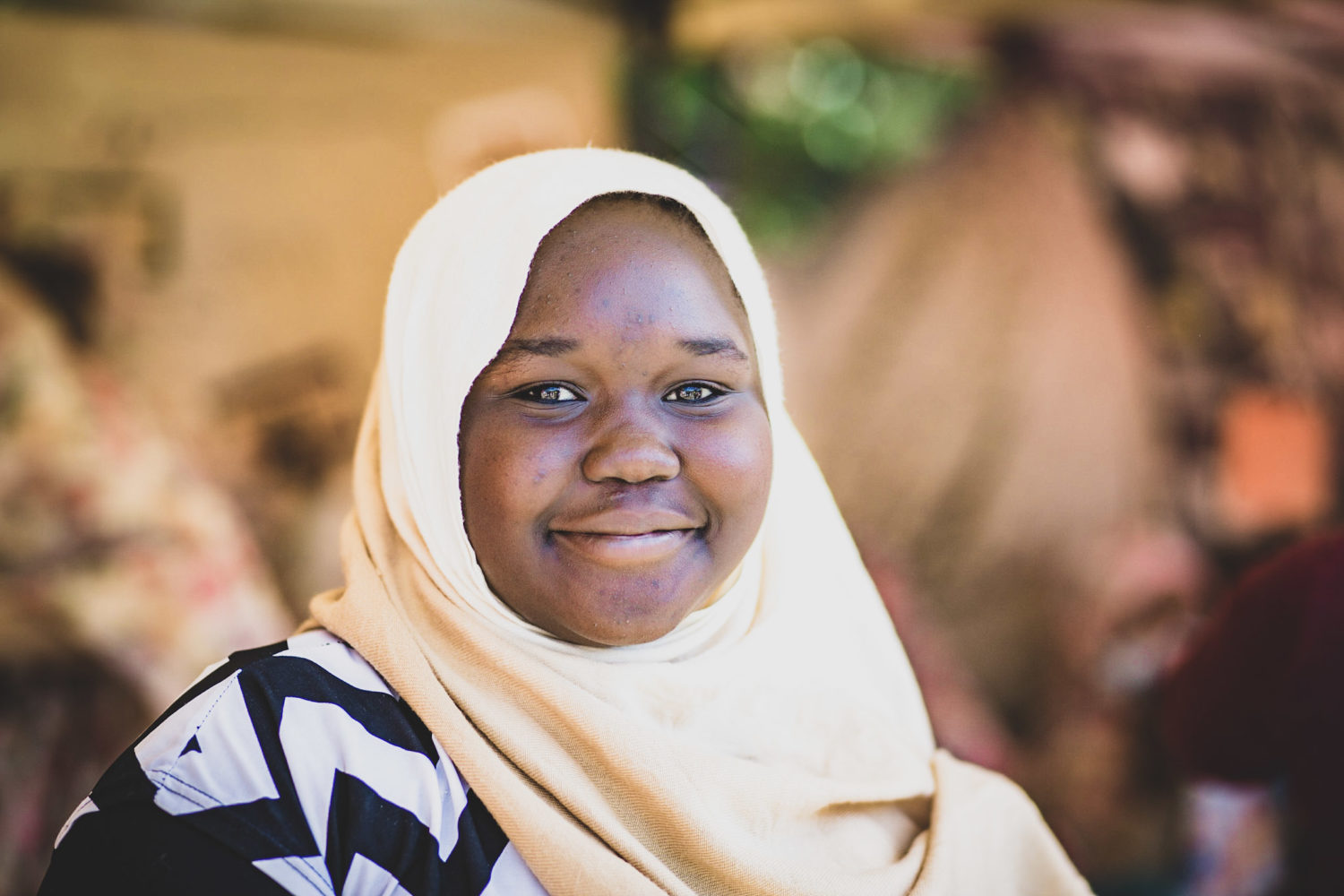
ATL Dependable Profile: Albritha Booker

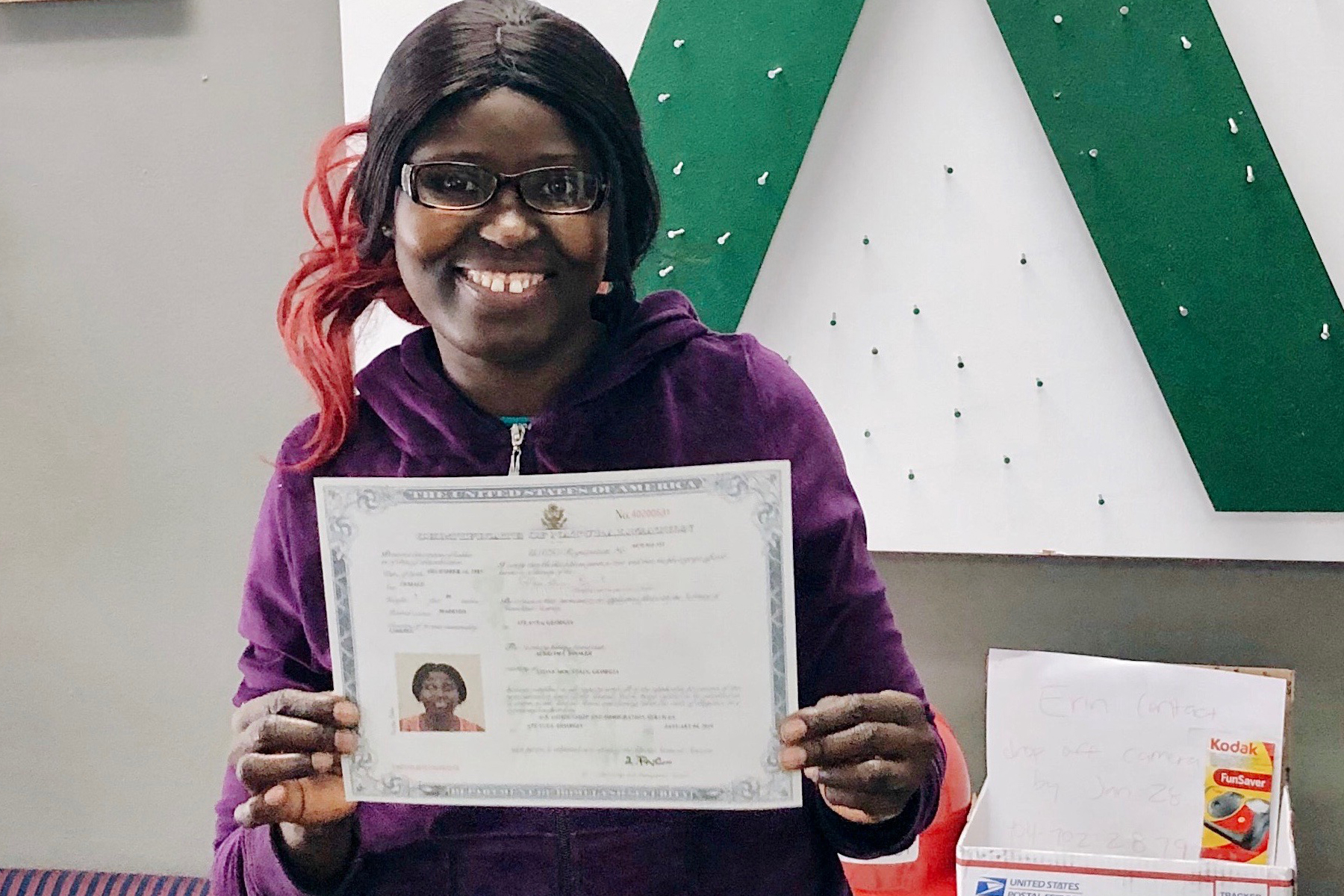
“I hearby declare, an oath, that I absolutely and entirely renounce and abjure all allegiance and fidelity to any foreign prince, potentate, state, or sovereignty, of whom or which I have heretofore been a subject or citizen; that I will support and defend the Constitution and laws of the United States of America…”

Albritha’s voice rings out among a sea of others gathered in the ceremonial courtroom. For her, this moment is the culmination of years of hard work.

Her story is not unlike many other refugees’. Born into ceaseless civil unrest, Albritha made the difficult decision, at 20, to leave Liberia. Her hope for a better future came at a cost— her mom, dad, brothers, sisters and grandparents she left behind.

But like Liberia, Ghana had challenges of its own.

“Ghana is a place that you struggle,” Abritha shares.

She soon became married and started a family. But eventually she realized that, while they couldn’t return home to Liberia, they couldn’t stay in Ghana either.

Albritha and her husband pursued the lengthy process of applying for resettlement. Finally in July of 2015, after years of being displaced, the United States of America became “home.”

In America, Albritha was steadfast about returning to work. But, as her family grew, it became difficult for her to find a job that offered a practical schedule that allowed her to meet her kids’ needs. She kept her 12-hour shift until she could no longer make it work. That was when a family member referred her to Amplio Recruiting.

“My nephew brought me to the office and I talked to Luke,” she remembers. “I applied, and then I waited—and kept praying.”

Albritha’s prayers were answered. Atlanta office Managing Director, Stephen Assink, soon called about a position at House of Cheatham, a local hair products manufacturer.

She began as a “packer” in July of 2017, and quickly made a name for herself because of her hardworking spirit and passion for excellence. Later that year Amplio recognized her leadership skills and promoted her to Amplio Team Leader, making her responsible for overseeing their 20 employees there.

“As Team Lead at House of Cheatham, Albritha has proven an immeasurable asset in helping us, at Amplio, better serve House of Cheatham,” shares Stephen. “Over the past year and a half, she has gone above and beyond in making sure that House of Cheatham and Amplio are strong partners.”

“My favorite part about my job is the people,” says Albritha. “I love the diversity. I love to be with people from different nationalities.”

Beyond her promotion to Amplio Team Leader, Albritha was recently hired on permanently at House of Cheatham, and assigned the role of back line lead, where she helps set up the assembly production. Albritha not only loves her job, but it has given her family the stability they needed.

“There is life. There is hope,” she says.

Albritha doesn’t consider herself a refugee anymore. Now, she is an American.

Like many others who have gone before, and taken the same oath, she knows this truth:  “Becoming an American citizen is a privilege.”

It is a privilege she is grateful for.

At Amplio, we believe the refugee workforce is America’s best-kept secret for economic growth. Resettled individuals, like Albritha, are proving their talent and motivation in companies in cities across the U.S. including AtlantaDallasHouston, and Raleigh. To learn why refugees make some of the best employees, or learn more about our services, visit our website or contact us today.

HOU Team Member Highlight: Courtney Lauffenburger

Courtney Lauffenburger grew up in a small town with one stoplight, but that didn’t keep her from exploring the world.

Homeschooling allowed their family to travel often, while teaching Courtney and her siblings to take charge of their own education. Traveling as a teen gave her a broad world-view, as she engaged with life outside of her small West Texas town.

“I went on several mission trips in high school that were pivotal,” she shares. “They took me out of my teen bubble and opened my eyes to others’ realities that I was previously oblivious to. They grew my compassion, and that’s how my heart for missions began.”

Courtney then attended Texas A&M to study Finance. That summer, in what she calls “an unexpected chain of events,” she was accepted into a summer internship— in London.

“It was a small organization raising money for music projects for children in impoverished countries in Africa,” Courtney explains. “I helped coordinate a Guinness World Record attempt called ‘the Largest Simultaneous Busk (playing music)’  in order to raise money for the organization.”

The internship was a perfect match for Courtney’s passions and strengths.

“I loved getting to use my gifts for organization and facilitation,” she remembers. “In the end, it sparked a feeling that I wanted my work to be something I could believe in.”

After completing her time at Texas A&M, Courtney decided to venture on one more mission before starting full-time employment. She felt compelled to go with a church group to Brussels, Belgium, where they would work with refugees that had been displaced.

It was the year after the Syrian crisis, and Courtney’s group partnered with several refugee aid groups where they met practical needs, taught classes, and held children’s camps.

“The Lord opened my eyes to the plight of the refugee,” she shares about that pivotal moment. “He showed me His heart for them. When I returned home, I didn’t want to lose [that]. “

Courtney again returned to Texas and settled in Houston, working at a business consulting firm. It wasn’t long before she fell in love with the area’s diverse city vibe. She began volunteering with a refugee outreach, welcoming new arrivals and helping them navigate their new life in the U.S.

Courtney was learning a lot from consulting, but the desire for more meaningful work was developing within her. “From my time in Belgium, I learned a calling God had placed in me was business as a mission,” she shares.

About that time, a new company had just arrived on the Houston scene— Amplio Recruiting— a first-of-its-kind staffing agency, connecting companies in need of workers with refugees in need of living wage work. The business was already a great success in several cities, including Atlanta, and Houston’s vibrant refugee community made it a perfect place to expand.

Through her volunteering, Courtney heard about Amplio, and was eager to learn more about their work. She reached out, and soon sat down to dinner with Dirk and Raquel Cameron who were helping launch the Houston office.

“Dirk started explaining what Amplio did and how they got involved,” Courtney recalls. “I felt something burning in me. It’s hard to explain. I was so excited, but I thought Man, I’m only a year out of school. I need more experience before I’m helpful anywhere.”

Later that week, Courtney opened her email to find a message from Dirk— with an application attached.

“We never even talked about it during dinner,” Courtney laughs. Despite her strong desire to apply, she questioned the timing. She was recently engaged and had just started a new work project.

Still, she felt pulled to Amplio and was encouraged by her fiancé and others to apply. Courtney decided to be upfront about her inability to start immediately, and trust that whatever happened next was meant to be. She met with Amplio CEO Chris Chancey, and President Luke Keller, and the two decided Courtney would be a great fit for Houston. They made her an offer, and Courtney said “Yes” for the second time that year and began yet another long wait.

“There was a seven-month period before I could start. I had my work project, which had me very busy. Then the wedding in September. It’s been a blur of a year!”

There was also preparation leading up to Courtney’s start date with Amplio. She met as needed with Roman Khripunov, another member of the Amplio team helping grow the Houston location by way of making new connections within the refugee community.

“Having been raised in the refugee community in HoustonRoman knew these people needed sustainable employment. His excitement for Amplio’s mission was contagious,” Courtney says. “It made me excited!”

2018 finally came to a close and Courtney began 2019 with a new name— and a new job.

As Amplio’s Houston Managing Director, she is responsible for recognizing local businesses’ needs, and engaging with refugee organizations to find individuals who will best fit the open positions.

It’s a high-demand role, but one that she says is fulfilling.

“So far it’s been a lot of research and meetings,” she says. “I’m learning what companies need, and how to sign contracts. My favorite thing is believing in every little thing I’m doing. Mundane, or not. I know the purpose. Everything has an impact, and it’s so motivating.”

“Courtney has a visible passion for wanting to help connect the reliable refugee workforce to great businesses in Houston,” Amplio president, Luke Keller shares. “Her passion plus talent in sales makes her the ideal leader. We are absolutely blessed to have her on the team.”

As a Texas native, Courtney is passionate about seeing her community of local businesses thrive. And she believes that refugees play a big role in that.

At Amplio, we believe hiring refugees is a win-win labor shortage solutionCompanies who hire refugees experience greater dependability, increased productivity, and better recruitment. They also see an increase in creativity and innovation. Their refugee employees gain dignity, self-sufficiency, and a ladder to realize their dreams.

Learn more about hiring the legalmotivated refugee workforce by visiting our website. If you’re a Houston businessman or businesswoman, Courtney would love to connect. Contact her today or schedule an appointment to learn more about our benefits and services.

Refugee Workforce: A Dependable Workforce

“The biggest difference is their dependability.”

A lot has changed since Storr Office Environments opened their doors for business over a century ago. Their town, Raleigh, North Carolina, has grown significantly. Storr has too.

Business needs have evolved, and the company has kept up. Sure, they still deliver desks, but now they’ll install the entire space to put it in. More than furniture, they sell an office experience.

But something else had changed in Storr’s hundred plus years of existence— American workers.

At their current size, they employ a range of forty to eighty contractors to service their broad client base. Their requirements? Simple: show up on time, dressed appropriately, and execute the specialty installations.

In recent years, finding contractors had become difficult enough. Of those who showed up, many were late, dressed in offensive or sloppy clothing, and slow to complete the work. They also weren’t sticking around.

As a company with both a busy schedule and a commitment to excellence, Storr was stuck between a rock and a hard place. When we became connected to Storr, they immediately caught the vision for how the refugee workforce could be exact solution to their needs. They told us they had used other staffing companies before, which often resulted in aforementioned unmotivated workers, but were open to giving us a shot. They hired nine refugees, and after overcoming a few initial hurdles, the company and their new team settled into a groove.

Their refugee workforce didn’t show up on time— they showed up early. And enthusiastically wearing their clean company polos. When projects ran late, they stayed late— never losing their smiles.

“The biggest difference is their dependability,” team lead, Cody Lagana shared in an interview. “If anyone thinks they’re going to be even five minutes late due to unforeseen circumstances, they’ll call me. From the second they get here, they are ready to work. They even check in with me at the end of the day to make sure I don’t need more help before clocking out. It means a lot.”

While dependability used to be a trait companies took for granted, now its a quality that has rapidly deteriorated from the American workforce.

However, there are other companies like Storr, who have found high motivation in the refugee workforce.

. . . . . . . . . .


When companies call our office looking to hire employees, it seems no matter how specific the job or unique the industry, most of them communicate the same message: they are simply looking for legal workers who will show up, on time, ready to work.

At Amplio, we simply call this responsibility.

Responsibility over time equals dependability.

Dependability is the most supreme value of the refugee workforce.

While many Americans don’t seem interested in putting in a hard day’s work for a fair pay, and are ready to jump ship at the next opportunity that comes along— refugees show up, work hard, and they stay.

The reason is not complicated: where refugees are welcomed, they are loyal. Their gratitude for a positive, welcoming work environment compels them to stay longer.

In a study by the Tent Partnership for Refugees, researchers found that rates of turnover among refugee employees were “seven to 15 percentage points lower than for the overall workforce. In their interviews with 26 employers across several industries, 19 firms reported lower turnover rates for their refugee employees, when compared to other employees.

In our experience, the industry standard for retention after three months sits at a dismal 40%. After four years of staffing local companies with the refugee workforce, we are seeing an 80% retention rate after 3 months, and nearly 70% after an entire year.

The dependability of the refugee workforce is how clients like Gourmet Foods International have finally been able to gain traction, instead of spending precious time, energy, and resources into constant hiring and rehiring,

After filing their team with refugees, they were able to meet their production goals without incurring overtime.

“It impacted the department greatly,” supervisor, Orlando Morrow shared. “We have built our workforce. We have dependability. It turned our productivity from probably thirty to forty percent to ninety percent.”

Ninety percent. Simply because his workers were showing up on time and doing the work— something companies can no longer take for granted.

In the search for dependability, many companies are finding their answer in the dependable refugee workforce.


Refugee Workforce releases Fall 2019. Text Refugee to 444999 sign up for more info.


Refugee Workforce: A Motivated Workforce

Mohammad’s alarm wakes him out of a deep slumber. The sun is not even up when he wills himself out of bed to get ready for the long day ahead.

The sound stirs his six-year-old brother, who rolls over and falls promptly back to sleep. Mohammad dresses, and slips his heavy school books into an overburdened backpack.

After a hearty breakfast, he bids “maʿ al-salāmah”, “with peace”, to his mom and heads out to catch the bus. In a few more months, these early mornings will pay off. He’ll finally have his GED, the first step toward his dream of becoming a doctor.

On the college campus, you would never know Mohammad didn’t speak any English just seven months prior. Or that his education came to an abrupt stop more than three years ago.

He never did anything to deserve the war that beset his beloved nation, but Mohammad is determined not to allow it to continue holding him back.  He keeps pace with his classmates, listening intently and asking questions.

After school, many of  his peers head home to study. He heads to work.

Mohammad slips into a crisp clean uniform and clocks in. The pungent smell of cheese has become familiar, and almost comforting, to him. He sees the blocks he cuts and packages as building blocks to his family’s future here in the U.S.

His supervisor, Orlando, stops by to greet him. The two have a special friendship, forged by mutual gratitude.

Orlando and the team at Gourmet Foods International have welcomed Mohammad at a time when the nation’s fears and negative sentiment toward his people have risen to an all time high. His co-workers feel more like family.  They check in on him, and encourage his dreams.

Over the past few months, Mohammad has proven to be more than just a dependable, hard-working employee. His ability to translate between Arabic and English has opened the door of opportunity for the company to hire more Syrians, like him, including women who have never had the opportunity to work before. Mohammad has played a huge role in helping the department grow to healthy levels of staffing again. Productivity and morale are up for the first time in years.

His shift ends, and Mohammad boards the bus again to head home. He fights to keep his weary eyes open so he doesn’t miss his stop. At home, his family gathers around the table, sharing a meal, and swapping stories about their day. His youngest brother catches his eye, hopeful for a few minutes of his attention after dinner. Six-year-olds, it seems, never get tired.

There is much studying to do before Mohammad can finally rest, but he makes the time to play. How could he not? After a good-natured round of hajila (hopscotch) with his brother, he is surprisingly energized, and settles in for the evening with his mathematics book.

Tomorrow, he’ll do it all again.

. . . . . . . . . .


A 2017 report from the Migration Policy Institute revealed that “refugee men are more likely to work than U.S.-born men, while refugee women work at the same rate as their U.S.-born counterparts.” The reason behind their motivation is not complicated: after being forced to start life over again, refugees are driven by their desire to regain some sense of the life—and dignity— they lost.

It is a daunting task, with three primary areas they must re-establish: career, capital, and community. For now, we’ll look at the first two.

With limited financial assistance, the race to secure income begins the moment their plane touches down. Adding to that stress is the reality of navigating an unfamiliar employment processes— in a language many are just beginning to learn.

We cannot emphasize enough the fact that the vast majority of refugees already had steady and successful careers before fleeing, but refugees who are new to the English language often struggle to articulate their prior skills and experience effectively.

The other unfortunate reality is that many of these careers don’t carry over into the American marketplace. Refugees like Zinah, who we met in chapter two, have to completely change fields in order to gain some forward momentum. As one individual best described it, to refugees, USA stands for ‘You (U) Start Again.”

Re-establishing capital is another motivating factor behind the desire to work. Many refugees have had little or no access to work for months, or even years, prior to resettlement. With no credit history, and often no savings safety net, financial security is a priority.

As the clock ticks and their dollars dwindle, it’s no wonder many refugees end up taking jobs for which they are grossly overqualified. But this doesn’t seem to deter them from putting in 110% effort in any role they fill.

Because of their high motivation, the vast majority of refugees possess an unparalleled work ethic. It’s what empowers individuals like Mohammad to work one or more jobs, care for their families, and pursue higher education— and surpass others while doing it.

This strong work ethic results in an obvious benefit for companies: higher productivity.

Compac Industries, in Atlanta, tripled their production after trying the refugee workforce. Based on previous performance, the expected daily quota for pacifier clips was 300. After just a few weeks experience, the six refugee women they hired were consistently making 600-900 clips per day without sacrificing at all on quality. One individual produced 1,100 clips in one day. All this happened while chatting, laughing, singing along to music on their boombox, and rolling around in their comfy office chairs. Everyone was amazed.

A far cry from the charity cases they’re often made out to be, refugees have proven that they will take, and be grateful for, and make the most out of every ounce of opportunity they are given— and give back more.


Refugee Workforce releases Fall 2019. Text Refugee to 444999 sign up for more info.

Refugee Workforce: A Legal Workforce

“The company was not aware of those things.”

In the case of unknowingly hiring undocumented workers, ignorance isn’t bliss. Just ask the owners of Corso’s Flower and Garden Center, in Sandusky and Castalia Ohio.

One moment it was business-as-usual, the next they’re being raided by ICE agents. More than a hundred immigrants were detained for improper documentation.

“If mistakes were made or if anyone used false, fraudulent, or otherwise disingenuous identification documents or other documents to secure employment at Corso’s, the company was not aware of those things,” the multi-million dollar floral business said, in a statement, shortly thereafter.

Unfortunately for them, that didn’t change anything.

The oversight has cost them a criminal investigation that could be the end of the company they worked so hard to build.

It’s true that immigrants make fantastic employees, which is why so many companies are eager to hire them.

In the past, some industries were notorious for hiring undocumented workers. These days, very few companies will take that risk. It’s all but dried up the labor pool, leaving some companies turning to a new one: the displaced.


. . . . . . . .


At the most basic level, companies need employees who are legal to work.

Since 1986, companies have been mandated to “complete and retain Form-I-9, Employment Eligibility Verification, for every person they hire for employment.”  These new requirements were aimed at deterring illegal immigrants from work, causing them to pursue legal routes of immigration or return to their country of origin. Companies with improperly documented employees on their payroll would face civil or criminal penalties ranging from a few hundred dollars to a few thousand dollars for multiple offenses.

When completing the I-9, employees must present their employers with documents that establish both their identity, and authorization to work.  The problem with this system is that companies are putting their trust in the hands of complete strangers. These potential employees could produce false documents undetectable to the untrained eye, like what may have happened in the case of Corso’s Flower and Garden Center.

Fortunately, in 1996, the U.S. government recognized this need and rolled out a new, optional tool for employers to verify their workers— e-verify. E-verify crosschecks information provided on the I-9 form with the Social Security Administration and the Department of Homeland to confirm an employee’s eligibility to work. As of now, this is the best way for companies to protect themselves against unknowingly hiring anyone not properly authorized to work.

To understand why refugees are a safe, reliable choice for employment, let’s take a look at their status within the United States’ immigration system:

  • All refugees are immigrants, but not all immigrants are refugees.
  • Refugees are not asylees, who are already in the U.S. or at the border when they claim or apply for asylum status.
  • Refugees are “immigrants,” different from “nonimmigrants,” meaning that they intend to stay. Nonimmigrants are only allowed temporary stay.

The U.S. Citizenship and Immigration Services website explains, “Refugees are authorized to work because of their immigration status. Just in the case of any employee, a refugee may choose to present any applicable document from the Lists of Acceptable Documents. DHS provides refugees electronic and paper Forms I-94 (Arrival/Departure Record) that evidence their status and employment authorization, as well as Forms I-766, Employment Authorization Document.”

Refugees also apply for Social Security numbers, and are required to apply for Legal Permanent Residence status after one year of physical presence in the United States. After five years, they are eligible to apply for citizenship.

In short, refugees are legal, documented immigrants who are authorized to work and pay taxes from the moment they arrive. Because of the extensive vetting process in coming here, they’re easily verifiable.

Immigrant workers have long been desired in the workplace for their strong motivation, but can unknowingly pose a high risk if undocumented. In industries where Americans simply aren’t taking jobs, Refugees provide the best of both worlds— a legal and highly motivated workforce.


Refugee Workforce releases Fall 2019. Text Refugee to 444999 sign up for more info.

ATL Dependable Profile: Mohammad Rafiq

“No one puts their children in a boat unless the water is safer than land.”

-Warsan Shire


Mohammad slowly chews his last stale bite of biscuit.

Seven sunrises, six sunsets. He recounts in his head.

He was told the journey would take five days.

A sleeping boy leans heavily on his right shoulder, causing him to sweat. But there’s nowhere to move. He and about a hundred other Rohingya fill nearly every square inch of the fishing boat; each paid $300 for this rickety ride to opportunity.

At least, when we arrive in Thailand, I can find work.

Mohammad gags. The thick smell of vomit, urine, and feces mixes with the salty sea air, creating an unbearable, putrid aroma.

He scans the ocean. Another boat left shore with them at the same time, but he hadn’t seen it since. It held even more men looking for work.

A pang of fear hits him.

Will I die out here?

He thinks about his family back in Burma, including his loving wife and four-year-old daughter.

Will they die there?

Rumors of executions and entire Rohingya towns burned to the ground replay over again in his mind.

I am our only hope, Mohammad reminds himself, regaining his grit.

He wipes his misty eyes and looks back out at the horizon, praying for land.


. . . . . . . .


Mohammad did eventually make it off that boat, and he lived to tell about it.

The same could not be said for 100 of the 140 passengers on the other boat, which capsized at sea.

Neither could be said about many more who handed their life savings over to smugglers, only to receive death or slavery in return.

The Rohingya people of Southeast Asia have, only in recent years, made headlines. But they have endured decades of suffering at the hands of the Myanmar government, formerly called Burma, whose law does not recognize them as one of the country’s 135 legal ethnic groups.

In short, the Rohingya people are stateless—essentially making them illegal aliens in their own country. They cannot vote. They cannot work. They cannot move freely, or attain higher education. They are trapped.

More than trapped, they are persecuted. Nationalist Buddhists don’t take kindly to the Rohingya’s tightly held Muslim beliefs and have taken it upon themselves to “cleanse” their country of the minority group.

Beatings. Rape. Torture. Executions. Entire villages burned. Brutality so evident and so severe that the U.N. is now pushing for charges of genocide.

The end result: tens of thousands missing or dead. Hundreds of thousands displaced.

Most migrate to camps on the borders of Bangladesh and Thailand. They live in squalid accommodations, where they have little access to safe water, food, or aid of any kind.

A small percentage are lucky enough to be resettled as refugees. Mohammad Rafiq is one of these.

He landed in the U.S. three years ago, and made his new home in Atlanta, Georgia. In the tiny town of Clarkston, he found other Rohingya who were just like him. But he struggled to find a job that would allow him to fulfill his promise to support his family back home and eventually—hopefully—reunite.

Cultural and language barriers, along with no proof of work history or experience, made it difficult for Mohammad to find a good job. But he’d already made it this far, and he couldn’t give up now. His parents, wife, daughter and other family members were counting on him.

Enter, Jim Ferrari.

Jim lives in nearby Roswell, but visits Clarkston weekly. He was at church one Sunday when a young Rohingya man came in looking for a mosque. Jim helped him find one.

Soon, Jim became friends with a handful of Rohingya refugees, including Mohammad. To this day, he has them over for meals and Hindi movies; teaches them English; and takes them to appointments. He helps them out any way he can, and in return, they help him too. When Jim moved last year— they were the ones to show up.

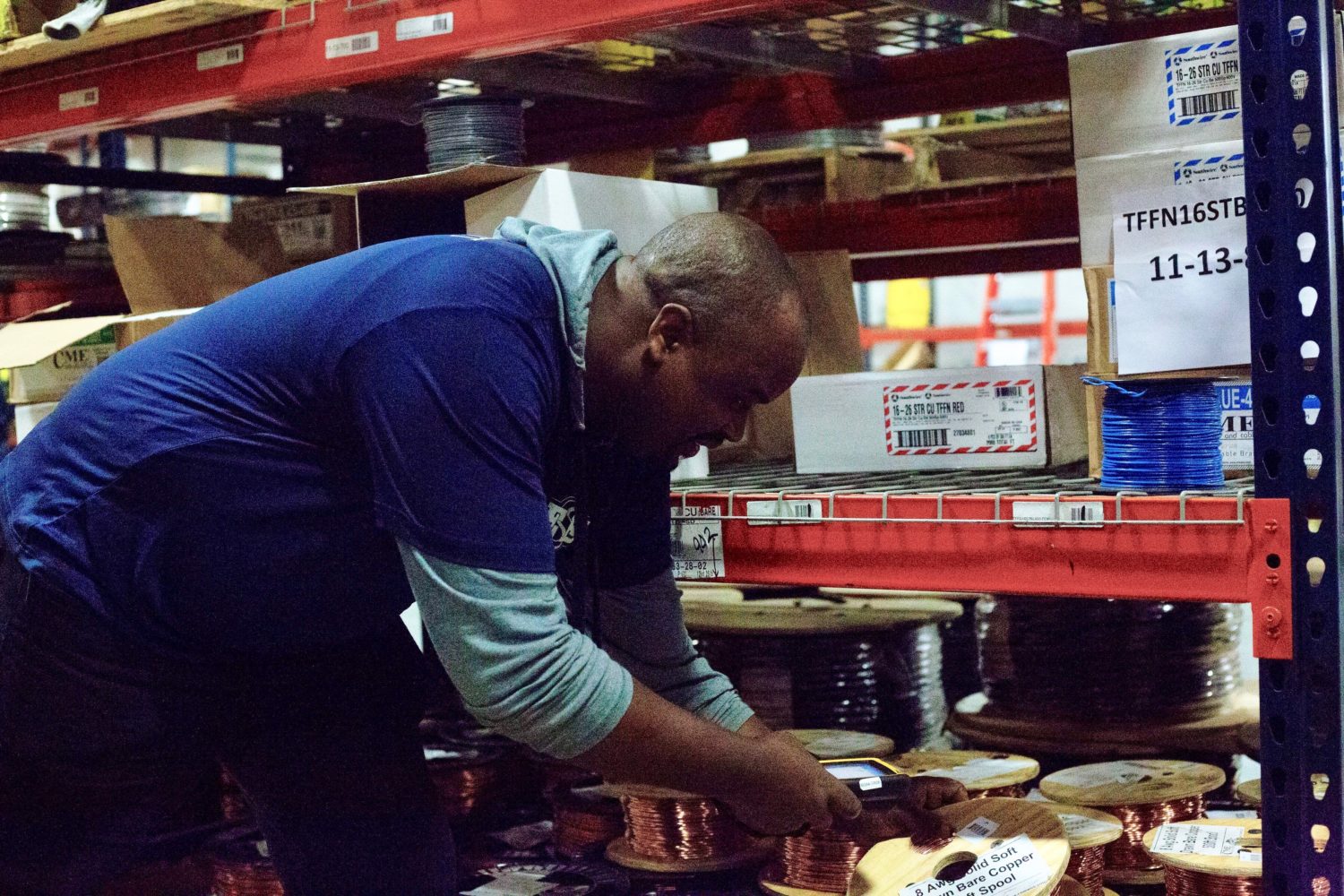
Jim connected Mohammad to Amplio Recruiting, a staffing company placing refugees in jobs in cities across the U.S. Their Atlanta office was just up the road from Mohammad, so he went to apply. Amplio worked with Mohammad to discover his passions and skills, and plugged him in at a position at Construction Resources, a local one-stop resource for building products, services, and expertise. There, he works hard to keep the shop clean and organized for projects.

While the role was initially planned to be short-term, Construction Resources liked Mohammad so much that they’ve kept him on. Six months later, he is being given more responsibility, and learning new skills.

“It’s a good company. I want to work there a long time,” he shares, soft-spoken. “I want to learn how to fix and build things.”

Mohammad pours his heart and soul into his work because he is grateful for the opportunity to provide for his loved ones who are still stuck in a desperate situation.

“Mohammad sends two-thirds of his paycheck back home to his family,” Amplio CEO, Chris Chancey shares. “His mom has a serious heart condition, so he sent money back for surgery and ongoing care.”

As for Mohammad, his heart is in Bangladesh with his family. Especially his daughter, now seven. But he believes, with enough help and hard work, one day they will reunite.

Their story is a fragment of the humanitarian crisis being unveiled in Myanmar. Refugees like Mohammad have withstood unimaginable hardships and yet continue to endure. They are resilient, steadfast, and motivated to work hard to rebuild their broken lives.

We believe the refugee workforce is the best-kept secret to grow American companies and expand the U.S. economy. Refugees are dependable and legal to work from the moment they arrive on U.S. soil. At Amplio, we connect great companies to this largely untapped labor pool. For more information on our services and the benefits of hiring refugees, visit our website or contact us today for a quote.

ATL Team Member Highlight: Glory B. Nix

“I not only get to help the businesses we serve meet their economic goals by having an amazing staff, but at the same time help the refugee community. It’s a win-win for everyone. It’s amazing to have a job like that.”

-Glory B. Nix, ATL Client Care Manager


Glory Nix’s passions have taken her around the world, from singing on stages to making smiles in South America. But more recently they led her back home, to help the international community right in her own backyard.

The only girl of her family, born between two brothers, Glory grew up with a flair for the dramatic. She loved musical theater and singing, and became classically trained in opera. But Glory also grew up with a love for diversity. In her hometown of Decatur, Georgia she attended school and church with individuals from all around the world.

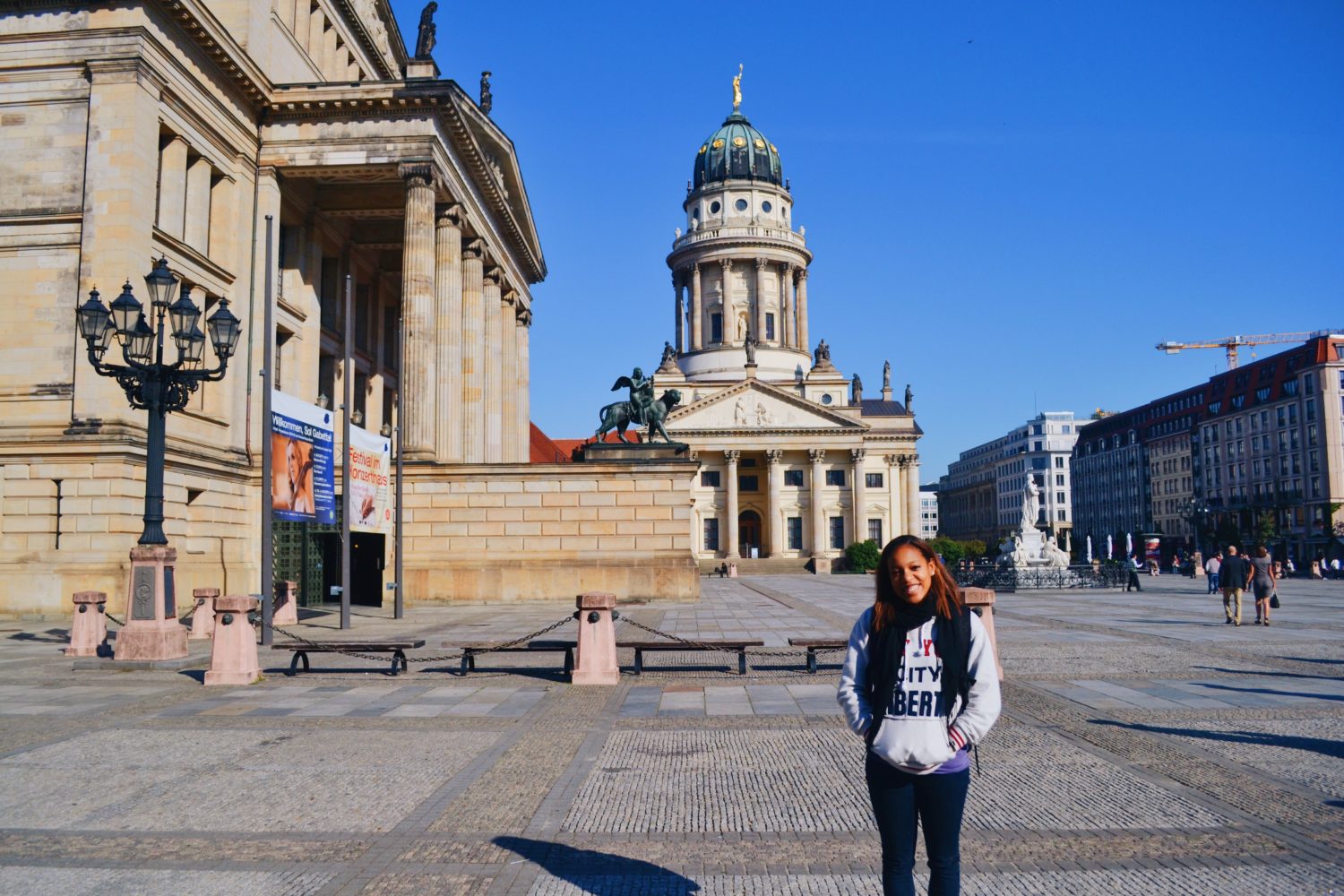
These separate but equal passions would lead her to pursue international studies, with a minor in musical theater—but not before spending a year studying in Berlin. She learned German and became immersed in the culture before heading to the University of Tampa. But even the sunny beaches of Florida couldn’t keep her from returning to Europe, this time to Paris, where she took culture classes and learned her third language—French.

Processed with VSCO with a6 preset

Bright and vivacious, it was no time at all before Glory graduated with her degree. Instead of jumping immediately into a career, she headed to South America to work on her growing Spanish skills. And what better way to do that than to volunteer? In Bolivia, she partnered with “The Smile Movement” to cheer up children undergoing treatment in local hospitals.

“Their hospitals are different,” Glory explains. “Parents can’t stay with you there. They can only visit for about one hour, then have to go back home. The kids were super lonely. I played with them, helped the nurses feed them, and assisted with rehabilitation whenever I could.”

Years later, those sweet memories linger in her mind. Continuing in that same spirit of giving back, Glory moved to D.C. to intern with local district congressman, John Lewis.

“He is a living piece of history,” she shares about the experience. “He marched with Dr. King. He advocates for civil rights, which I am passionate about. I assisted the legislative staff and attended hearings. I sat in and heard the Congressman speak. Upon finishing my internship I decided to pursue a job in D.C. in the international nonprofit sector.”

Glory applied for over 50 jobs on Capitol Hill—and they all fell flat. “I still don’t know how anyone gets a job in D.C.,” she laughs about the endeavor.

So instead, she put her “effervescent” (as she calls it) personality to work as a tour guide at the famous CNN Center in Atlanta.

Processed with VSCO with a6 preset

Around this time, Glory met a new friend at church, Stephen Assink. She told him about her passions. He told her about his job as local Managing Director at a refugee staffing company—Amplio Recruiting.

Glory was floored.

“I thought, this is just the best organization I have ever heard of. Though it’s not a nonprofit, it’s a company with a huge mission. It’s beneficial for the business world to see more B Corps.”

Fortunately for her, Amplio was hiring. Her personality, care, and excellence made her just the right fit for their Client Care Manager position.

Now, Glory serves at Amplio’s Atlanta office, one of four locations nationwide. Her days consist of calling and visiting clients, and even taking potential employees for interviews—anything and everything to create a positive, seamless experience for companies.

“Going to work is just so easy because I love the people I work for in the Clarkston community,” she says. “It’s just truly wonderful. I not only get to help the businesses we serve meet their economic goals by having an amazing staff, but at the same time help the refugee community. It’s a win-win for everyone. It’s amazing to have a job like that.”

“We are grateful to have Glory on our team to increase our ability to serve our clients with excellence,” Amplio CEO, Chris Chancey shares. “She brings joy, intentionality, and outrageous passion to her role as Client Care Manager.”

She has even been able to put her linguistic skills to work.

“I took some potential employees to interview with a client. Some were from Congo and spoke primarily French. I was able to help translate. They got the job, and they’ve been super successful so far!”

Nothing delights Glory and the Amplio team more than connecting great companies with the refugee workforce.

“Sit down with refugees and hear their stories,” she challenges skeptics. “Then it will become abundantly clear why they are here, and that they deserve all of the opportunities America has to offer.”

We believe the refugee workforce is America’s number one best-kept secret to fill labor shortages and expand the economy. Refugees are motivated, dependable, and legal to work from the moment they step foot on U.S. soil. Visit us online to learn more about why refugees make great employees, or contact us today for a quote.


10 Ways to Stand with Refugees in 2019


1. Contact your local representatives, urging them to increase the number of refugees allowed to seek asylum in the U.S. Click here to raise your voice.


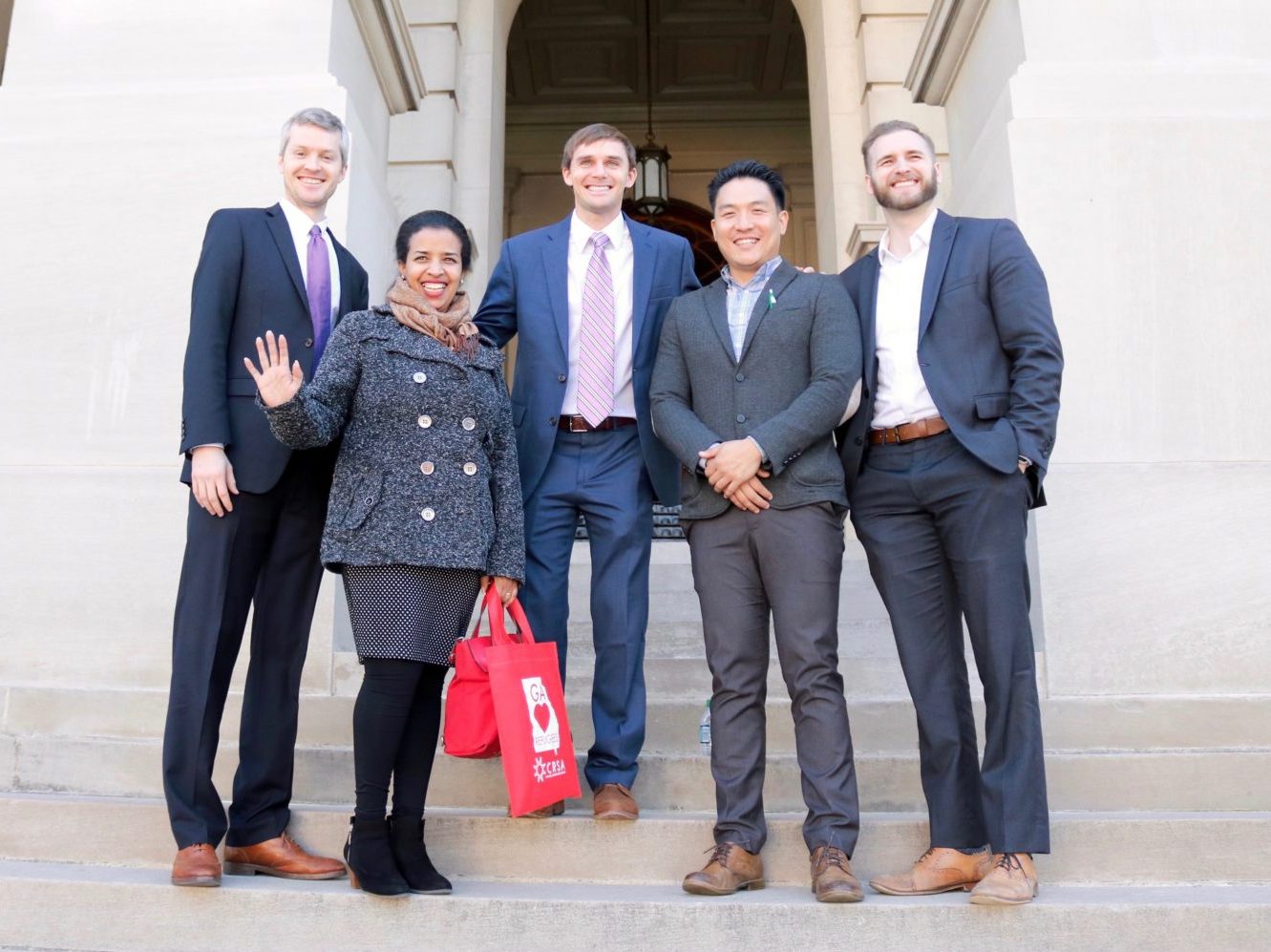
2. Save the date for the Coalition of Refugee Service Agency’s 6th annual New Americans Celebration at the Georgia Capitol on February 14, 2019 (more information to follow).


3. Purchase a copy of our new book, “Refugee Workforce,” which lays out a strong economic case for the value of refugees in the American workplace. Learn more and buy the book: www.refugeeworkforce.com


4. Purchase supplies at Choose Love that go directly to refugee families in need.


5. Hire a refugee or talk to your employer about the value refugees could bring to your company.


6. Tag/Share this post with one company you think could benefit from hiring the refugee workforce. We have locations in Atlanta, Dallas-Fort Worth, DetroitHouston, and Raleigh-Durham


7. Search “refugee organizations near me” to find a local refugee service provider and learn how you can get involved through giving, volunteering, and spreading the word.


8. Follow Clarkston film, a documentary about the most diverse square mile in America, set to release January 2020 (read more about their mission here).


9. Donate to the Amplio Foundation which supports the most effective non-profits in the country that are providing help to refugees. We want to be a force for generosity. That’s why we are honored to give from our profits to causes including: refugee entrepreneurship, job preparation, career skill development, and evangelism + discipleship. Watch for new partner posts and join us to invest generously in the resilient refugee workforce.


10. Support local businesses that hire from the refugee community.

Have your laundry done at Blusion in Atlanta.

Have your compost picked up by Living Earth in Houston.

Enjoy a meal or a round of golf at the Dallas Country Club.

Let Canopy handle your lawn care in Raleigh.

Amplio 2018 Recap

To Those Who Stand With the Refugee Workforce,

We at Amplio are more convinced than ever that America needs refugees more than refugees need America. Great companies across our country have proven this as they eagerly filled open positions with the refugee workforce in 2018.

This year, Amplio has provided staffing services for 84 companies in Atlanta, Dallas-Fort Worth, Houston and Raleigh-Durham, placing 831 refugees into full time positions. These amazing individuals, like Kisembo and Fanny, regained the dignity of work left behind when they fled their homes in search of greater security. Employment has allowed them to provide for their families financially, and give their children a great education. Collectively, over $3 million in taxes were paid by Amplio Employees this year alone.

The impact of the refugee workforce has been evident in companies across the U.S. including Gourmet Foods International and Storr Office Environments. Their stories speak for themselves in recognizing the tremendous value refugees bring to their teams.

I reflect back on this year with incredible gratitude for our internal staff and their drive to serve the community. As we continue to improve the efficiency and effectiveness of our model heading into 2019, I am thankful for the strong culture we have seen develop among our team this year.

While I believe Ampio plays a vital in each of the communities we serve, there are so many other pressing needs being met by our passionate non-profit partners like World Relief and For the Nations. This year, Amplio awarded $37,213 to multiple partners across the U.S. through our Amplio Foundation. We are thankful for their commitment to work tirelessly with us to provide greater stability for our refugee neighbors.

Finally, I am most grateful for the dependable and diligent refugees who courageously step into new jobs, learn new languages, make new friends and face every challenge to restart their lives on American soil. We’re glad you’re here. We need you.

As always, thank you for believing in, and standing with the refugee workforce. Here’s to an even greater impact in 2019.

With Gratitude,

Chris Chancey

Founder + CEO


ATL Team Member Highlight: Zinah Ghazi

“We’re grateful because we’re here. The United States opened doors for our safety.

 We don’t have to lock our doors with five locks just to be safe. We don’t have to check our cars for bombs. We don’t have to hear kids cry because they lost family members.

 We used to wake up every day expecting we would be killed. Here, we wake up every day like it’s our first day.”

-Zinah Ghazi, Iraqi refugee

_____________


BOOM.

Zinah’s eyes open. She sits up in bed.

Bombs are not unusual in Baghdad, but this one sounded close. Too close. She takes a deep breath to calm her pounding heart, then climbs out of bed to begin preparing for the day.

Life in Iraq had always been turbulent, as far back as Zinah could remember.

The Iran War.

Kuwait.

Desert Storm.

But the latest war had given her hope that it might finally be the last; that American troops could secure peace for Iraq.

That would not be the case. Specially after the rise of ISIS and sectarian violence that led to claimed the life of Zinah’s older brother, “the twin of her soul.” Her parents were forced to flee and hide under special circumstances, leaving the 24-year old biology student to juggle both school and household duties.

Instead, what’s left of her broken family sleeps behind multi-locked doors. Every morning Zinah checks underneath their car for bombs before starting the engine, then checks again at red lights just in case.

Tragedy and anxiety replay in her head, over and over again. The loss of her parents. The loss of her brother. The bombs. The death threats.

Suddenly, she is approached. They put a gun to her head and ask her to identify as either Sunni or Shia. Zinah knows that the wrong answer will mean a quick end for her. She takes a deep breath and answers…


Zinah’s story doesn’t end there. She didn’t become another number on her nation’s growing death toll that day.

Tragedy and anxiety would not define her life. She would.

While she had lost nearly everything, she had not lost her dream: to be safe, and to be successful. That dream kept Zinah moving forward.

She earned a bachelors degree in biotechnology.

She took a modest job in retail, then worked her way up to become sales manager.

She took a job with the International Relief and Development to promote broad-scale human progress in Iraq.

And at the same time, she went back to school to pursue her Master’s in genetic engineering.

While she was successful, she was not safe. So when Zinah received a call that she and her siblings were approved to enter the United States as refugees, she left it all behind at the prospect of peace.

Fortunately, it didn’t take long before others recognized her drive, skillset, and impressive accomplishments. Less than a month after her plane touched down in Atlanta, Georgia, Zinah was hired by the prestigious Emory University School of Medicine—an accomplishment she is still proud of to this day. Three years later she experienced a disheartening setback—being laid off.

It was a moment, she shares, that almost broke her. Until she turned it into an opportunity to achieve yet another dream—attending school in the U.S.

At this point, she was a full-time student, full-time mom, and worked two part time jobs as an interpreter and after school instructor, and yet she still went on to graduate with her database specialist degree… earning a 3.9 GPA to boot.

“The past few years was a great time of self-discovery,” Zinah shares about the experience. “I discovered that I don’t need to follow my passion; my passion will always follow me. I discovered my priority is to add value to the community, and to make a positive impact.

As refugees, we come with all this motivation because we lived very hard times in Iraq, so we want to add value; we want to give back. Maybe other people already had a perfect life. We lived a terrible life. When we come and see all this opportunity, we really appreciate it and want to give back.”

Now, she’s giving back by way of helping other refugees find work.

After graduating, Zinah began searching for a full-time job that would utilize her newly attained skills. Despite several interviews that ended in job offers, one stuck out to Zinah the most—a unique staffing company with a unique mission—Amplio Recruiting.

“From the first moment I came here, I felt the positive energy.” Zinah explains. “Amplio’s vision matched mine. They know what they do; they know how to do it; and most importantly, they know why they do it. They want to help the [refugee] community. Chris created a company that supports other great companies.”

Their mission? Connecting great companies to the dependable Refugee Workforce. The result? A win-win solution for companies and refugees alike.

And Zinah couldn’t be happier to play a part.

While her official title is Administrative Specialist, she says the team refers to her as “The Ninja,” since she has proven she can do, fix, or learn just about anything.

Her smile is bright, and excitement contagious as she shares her favorite part of working for Amplio: “Every day we add impact to somebody’s life. They come in and sometimes they’re hopeless. They don’t know if they’re going to have food tomorrow or not, but they leave with hope. They leave with a smile.”

“I feel, here, like I found my home. My family. Every time I come here, I smile from my heart. Here I am really, really happy. I’m using my computer skills and improving the database. I learn something new every day.”

The love and appreciation is mutual. When they’re not calling her “the ninja,” Zinah is often celebrated as “martaba aula,” Arabic for “number one.”

Atlanta Managing Director, Stephen Assink, says she’s brought their level of service up a notch. He shares, “Zinah’s focus and excellent computer skills bring an important element to the Amplio team here in Atlanta. She has added tremendous value in helping develop back end processes and structures vital for the success of our business.”


Ten years after her life was turned upside down, Zinah is thriving. She shares her story whenever and wherever she can in hopes to inspire and motivate others not only to pursue their dreams, but also to recognize the incredible value of the refugee community:

“The refugee community is so impressive because they are so motivated. Refugees want to be successful; to add value to the community. They want their towns to be a better place. They want the United States to be a better place. They have this energy to work hard.”

What value could hiring refugees add to your workforce?

Companies who hire refugees report higher productivity and improved retention, among others benefits. Refugees are legal, motivated, and dependable workers who are ready and willing to give back to the companies who invest in them.

We take pride in providing top-notch employees to companies across the United States including Atlanta, Dallas-Fort Worth, Houston, Raleigh. Our industry specialties include light industrial work, hospitality and construction. For more information about whether the Refugee Workforce could be a good fit for your company, visit our website or contact us for a quote today.